

Why First-Time Renovators Almost Always Misjudge the Clock
There's a particular kind of optimism that strikes people planning their first renovation. The inspiration board is full, the budget is set, and the finish line feels close. Then reality intervenes - and the project that was supposed to take six weeks stretches into four months.
This isn't bad luck. It's a predictable pattern rooted in specific, avoidable planning errors. Understanding what typically goes wrong is the first step toward building a schedule that actually holds. If you're new to home improvement projects, starting with the fundamentals can give you a clearer picture of how these projects work before you commit to a timeline.
Treating the contractor's estimated start date as the actual start date.
Why it happens: First-time renovators often book a contractor and assume work begins on the agreed date. In practice, contractors juggle multiple jobs, and prior projects routinely run long, pushing your start date back by days or weeks.
Not accounting for permit approval time before scheduling trades.
Why it happens: Many homeowners assume permits are a quick formality. In reality, permit review timelines vary widely by municipality and project type - commonly one to six weeks, sometimes longer for structural or electrical work.
Using YouTube completion times as a realistic benchmark.
Why it happens: Tutorial videos are edited for entertainment and often show experienced professionals working in ideal conditions. A task that appears to take two hours on screen may realistically take a first-timer a full weekend.
Ignoring the impact of scope changes mid-project.
Why it happens: Once walls are open, it's tempting to address adjacent issues or upgrade original choices. Each change, however small, ripples through the schedule - requiring new materials, revised contractor schedules, and sometimes additional permits.
Failing to build a buffer into the overall timeline.
Why it happens: Novice renovators build schedules around best-case scenarios - no delays, no surprises, no learning curve. When anything deviates, there's no slack to absorb it.
The Hidden Time Costs Renovators Rarely Plan For
Beyond the mistakes listed above, several structural time costs are simply invisible until you're in the middle of a project.
30-50%
Average timeline underestimate for first renovations
Industry professionals and renovation project managers consistently observe that first-time homeowners underestimate project duration by this margin before encountering real-world delays.
1-6 weeks
Typical permit review wait times
Building department review periods vary significantly by municipality and project complexity; structural and electrical permits often take longer than cosmetic ones.
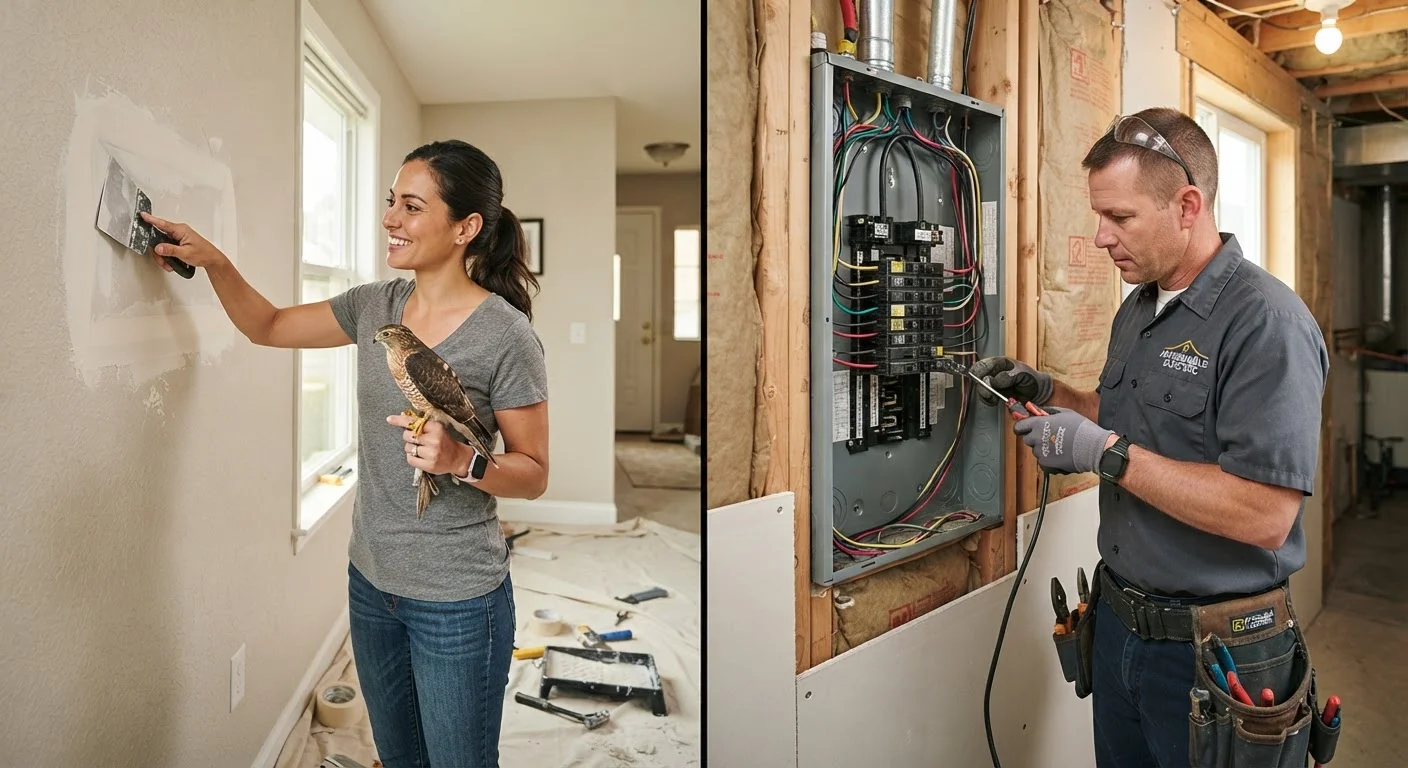
Trade sequencing is one of the biggest. Certain work must happen in a fixed order: rough plumbing and electrical before insulation, insulation before drywall, drywall before painting. Each stage typically requires an inspection before the next one can start. In many jurisdictions, inspection wait times can run from a few days to a few weeks depending on local workload. Failing an inspection means restarting that wait entirely.
Material lead times are another. Custom cabinetry, specialty tile, and certain fixtures can take six to twelve weeks to arrive. If you haven't ordered them before demolition starts, you may end up with an unusable kitchen for months. Our kitchen renovation planning guide walks through exactly how to sequence these decisions so materials arrive when you need them.
Never Schedule Trades Before Permits Are Issued
Booking contractors before permits are approved is one of the costliest scheduling errors a first-time renovator can make. If the permit is delayed or denied, contractor cancellation fees, rescheduling gaps, and idle project time can add significant unplanned costs. Always confirm permit approval - not just application - before locking in trade schedules. For work involving electrical panels, gas lines, or structural changes, a licensed professional should pull the permit, not the homeowner, in most jurisdictions.
For a broader look at keeping complex projects on track once work begins, the strategies in managing a home renovation without losing your mind are worth reviewing before your first contractor shows up.