
Why Smart Home Myths Persist - and Why They Matter
Smart home technology has moved from novelty to mainstream faster than many people realize, yet a surprising number of Americans are held back by misconceptions that were either never accurate or have long since been overtaken by how the technology actually works. These myths aren't harmless - they lead people to avoid useful tools, make overly cautious purchasing decisions, or, on the flip side, underestimate genuine considerations like privacy.
The goal here isn't to sell you on smart home tech. It's to give you an accurate picture so you can decide what - if anything - makes sense for your home. For a candid look at what you're genuinely trading off when you add connected devices, the honest trade-offs of owning a smart home device lays it out plainly. And if you're already familiar with how myths can cost you in other areas of home ownership, you may notice patterns similar to those covered in home maintenance myths that cost homeowners money.
Myth
Smart speakers are always listening to my conversations and recording everything I say.
Fact
Smart speakers are designed to listen only for a designated wake word, not to continuously record conversations.
This is one of the most persistent concerns about smart home tech - and it's understandable. However, the way these devices are engineered, the microphone is processing audio locally and only transmits data to company servers after detecting the wake word (like "Hey" followed by the assistant's name). Security researchers have documented occasional false activations, but continuous, intentional recording of all household audio is not how these devices are designed to function.
That said, privacy considerations around smart speakers are real and worth understanding. For a deeper look at what data these devices actually collect, see what data smart home devices collect and how to limit it.
Myth
You need a central hub to run a smart home - without one, nothing works together.
Fact
Many modern smart devices connect directly via Wi-Fi or Bluetooth and don't require a separate hub at all.
Hub-based systems were common in earlier generations of smart home tech, but the landscape has shifted. A large number of today's smart plugs, bulbs, locks, and sensors connect directly to your home Wi-Fi router and are controlled through a smartphone app. The industry has also introduced a shared standard called Matter, which allows devices from different manufacturers to communicate without proprietary hubs. If you're weighing whether to commit to a single ecosystem, the case for and against a single smart home ecosystem is worth reading before you decide.
Myth
Smart home devices are so complicated that you need to be technically savvy to set them up.
Fact
Most consumer smart home products are designed for non-technical users and can be set up in minutes using a smartphone app.
Manufacturers have invested heavily in making onboarding as frictionless as possible. Scanning a QR code, following in-app prompts, and connecting to your existing Wi-Fi network is the typical setup process for most devices. You don't need to understand networking protocols or write any code. If you're new to the category, smart plugs explained without the jargon is a good, low-stakes starting point - they're among the simplest smart devices available and illustrate how straightforward setup generally is.
Myth
Devices from different brands can't work together - you're locked into one company's ecosystem.
Fact
Cross-brand compatibility has improved dramatically, and the Matter standard specifically exists to enable interoperability across manufacturers.
The frustration of incompatible ecosystems was a legitimate complaint for years, but the industry has responded. The Matter protocol - backed by major technology and home device companies - establishes a common language for smart home devices regardless of who made them. While not every device supports Matter yet, its adoption is growing. Even outside Matter, many devices support common platforms that act as a bridge between brands. Checking for compatibility before purchasing remains wise, but the days of being completely locked into a single brand are increasingly behind us.
Myth
A smart home is only worth it if you automate everything at once.
Fact
Smart home setups work perfectly well when built gradually - starting with one or two devices is a practical and low-risk approach.
Many people delay getting started because they imagine a smart home requires a complete overhaul. In reality, a single smart thermostat or a couple of smart bulbs can deliver meaningful convenience without any major commitment. You can expand at your own pace, learning what works for your household before investing further. The technology is designed to be modular. If your devices lose connectivity along the way, why smart home devices disconnect and how to fix it explains the common causes and straightforward solutions.
Myth
Smart home devices significantly increase your electric bill.
Fact
Many smart devices are designed to reduce energy consumption, not increase it, though the overall impact depends on usage patterns.
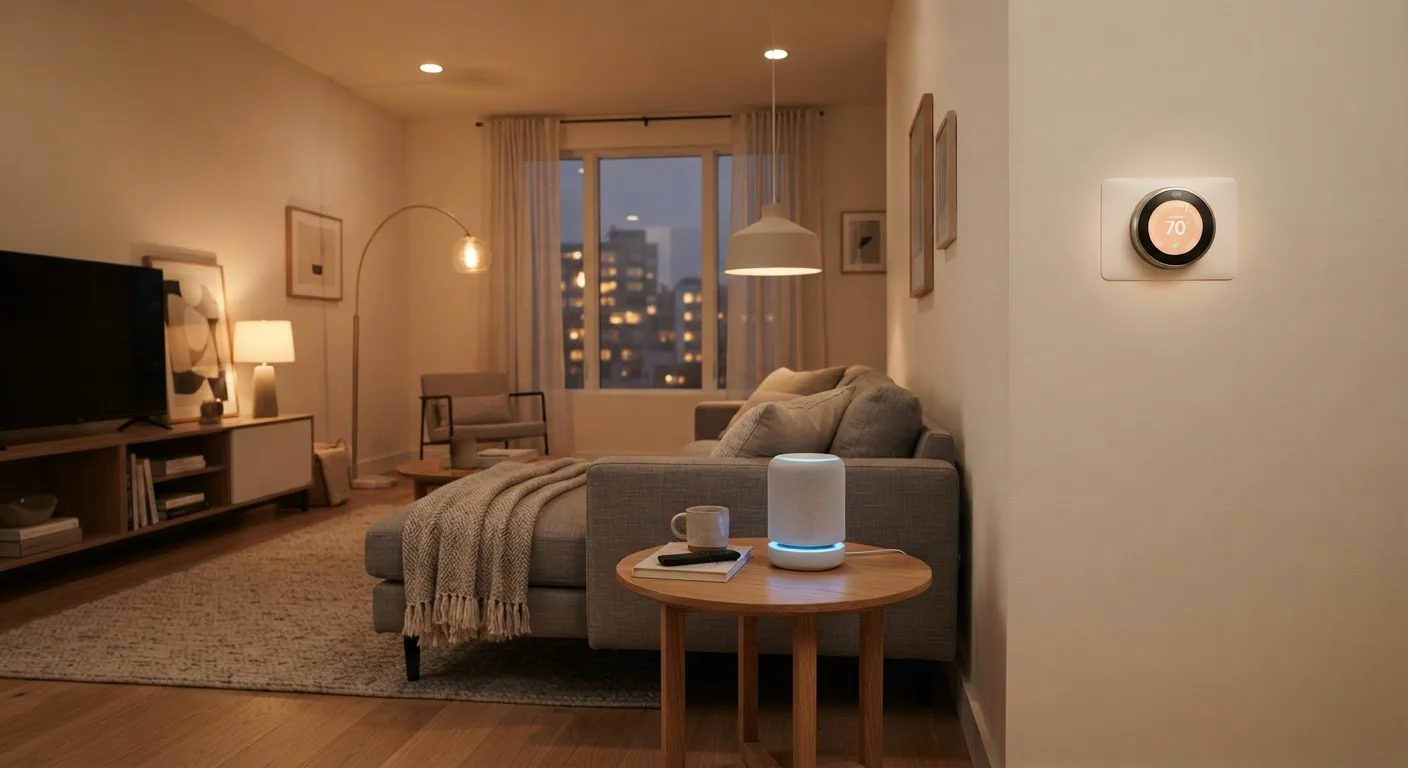
Smart thermostats, for example, are frequently cited by energy researchers as tools that can help reduce heating and cooling costs when configured correctly - because they avoid conditioning an empty home. Smart plugs with energy monitoring can reveal which appliances are drawing standby power unnecessarily. The devices themselves consume a small amount of electricity, but this is generally minor. Whether you see energy savings depends heavily on how you use the technology and what you replace or supplement with it - results vary by household.
Keeping Perspective: Real Risks vs. Overstated Fears
Correcting myths doesn't mean dismissing every concern. Privacy is a legitimate topic when it comes to smart home devices - microphones, cameras, and sensors do collect data, and understanding what's gathered matters. The good news is that most privacy settings are accessible to everyday users, and small steps like reviewing app permissions and keeping device firmware updated go a long way.
Don't Ignore Default Privacy Settings
Many smart home devices ship with default settings that prioritize convenience over privacy. It's worth spending a few minutes in the device app to review what data is being shared and with whom. Disabling features you don't use - like voice history storage or third-party data sharing - is usually straightforward and can meaningfully reduce your exposure.
Online security more broadly is worth staying informed about. Our staying safe online hub covers practical, jargon-free guidance for protecting yourself digitally. And if you're concerned about deceptive practices targeting connected-device users, scam tactics targeting everyday internet users is a useful read. Smart home tech, approached with reasonable awareness, can be genuinely useful - and understanding the difference between real risks and persistent myths is the first step.
69%
U.S. adults with at least one smart home device
According to a Pew Research Center survey, roughly seven in ten American adults reported owning at least one smart home device.
~30%
Potential heating/cooling savings with a smart thermostat
The U.S. Department of Energy has noted that programmable and smart thermostats, used correctly, can reduce HVAC energy use by roughly 10-30% depending on prior habits.