
Why Setup Order Actually Matters
Most people dive into a smart home by buying a device that catches their eye - a smart bulb here, a video doorbell there - and then wonder why things feel chaotic six months later. Devices don't talk to each other, the app situation is a mess, and the Wi-Fi cuts out constantly. The frustration is real, and it's almost always the result of skipping foundational steps.
Building a smart home is a lot like renovating a room: doing things in the right sequence saves time, money, and headaches. The good news is the right order isn't complicated. It just isn't how most people naturally think about it. This guide walks you through a logical sequence so each piece you add actually works well with the rest.
For a broader perspective on outfitting your entire home with technology, the room-by-room home tech setup guide is a helpful companion read.
Smart home platform
A central app or ecosystem (like Google Home or Apple HomeKit) that lets you control and automate multiple smart devices from one place.
Mesh Wi-Fi
A home networking system that uses multiple router nodes to provide consistent wireless coverage throughout a larger space, eliminating dead zones.
Matter standard
A relatively new industry protocol designed to make smart home devices from different manufacturers work together more reliably, regardless of which platform you use.
Smart plug
A device that plugs into a standard wall outlet and makes whatever is connected to it controllable via an app or voice command.
Firmware
The built-in software that runs on a smart device. Keeping it updated is important for security and performance - most devices update automatically or prompt you through their app.
Step One: Lock Down Your Wi-Fi
Every smart home device - whether it controls your lights, your locks, or your thermostat - depends on your home Wi-Fi network. A weak or inconsistently configured network is the number one cause of smart home frustration. Before buying a single device, it's worth spending time on your router setup.
- Use a modern router: Older routers struggle to handle multiple connected devices simultaneously. A router that supports the Wi-Fi 5 or Wi-Fi 6 standard handles smart home traffic more reliably.
- Separate your networks: Many routers let you create a guest network. Putting smart home devices on a separate network from your computers and phones is a straightforward security practice worth adopting early.
- Place the router centrally: Dead zones in your home mean devices at the edges lose connection. A centrally located router - or a mesh Wi-Fi system for larger homes - provides more consistent coverage.
If your devices keep dropping off the network after you've set them up, the smart device disconnection troubleshooting guide covers the most common causes and fixes.
Step Two: Pick a Smart Home Platform
A smart home platform is the central app or ecosystem that connects and controls your devices. Common examples include Google Home, Amazon Alexa, and Apple HomeKit. Choosing one platform before buying devices prevents the common trap of ending up with five separate apps that don't communicate with each other.
When evaluating platforms, consider which devices you already own (smartphones, smart speakers), whether you prioritize voice control, and how comfortable you are with the privacy policies of each ecosystem. The Matter standard - a relatively new interoperability protocol - is gradually making it easier for devices from different ecosystems to work together, but compatibility still varies by product.
Stick to One Ecosystem Early On
When you're just starting out, picking devices that all work within your chosen platform - even if that means slightly fewer options - saves significant frustration later. Mixing ecosystems is possible but adds complexity that beginners don't need in the first few months of setup.
Once you've picked a platform, privacy becomes an immediate concern. Smart home devices collect more data than many people expect. The smart home privacy guide explains what's typically being gathered and how to limit it.
Step Three: Start With High-Impact Devices
Once your network is solid and your platform is chosen, the practical question becomes: what do you actually buy first? The most useful starting devices are ones that provide a noticeable benefit every day and are straightforward to set up.
Smart Thermostat
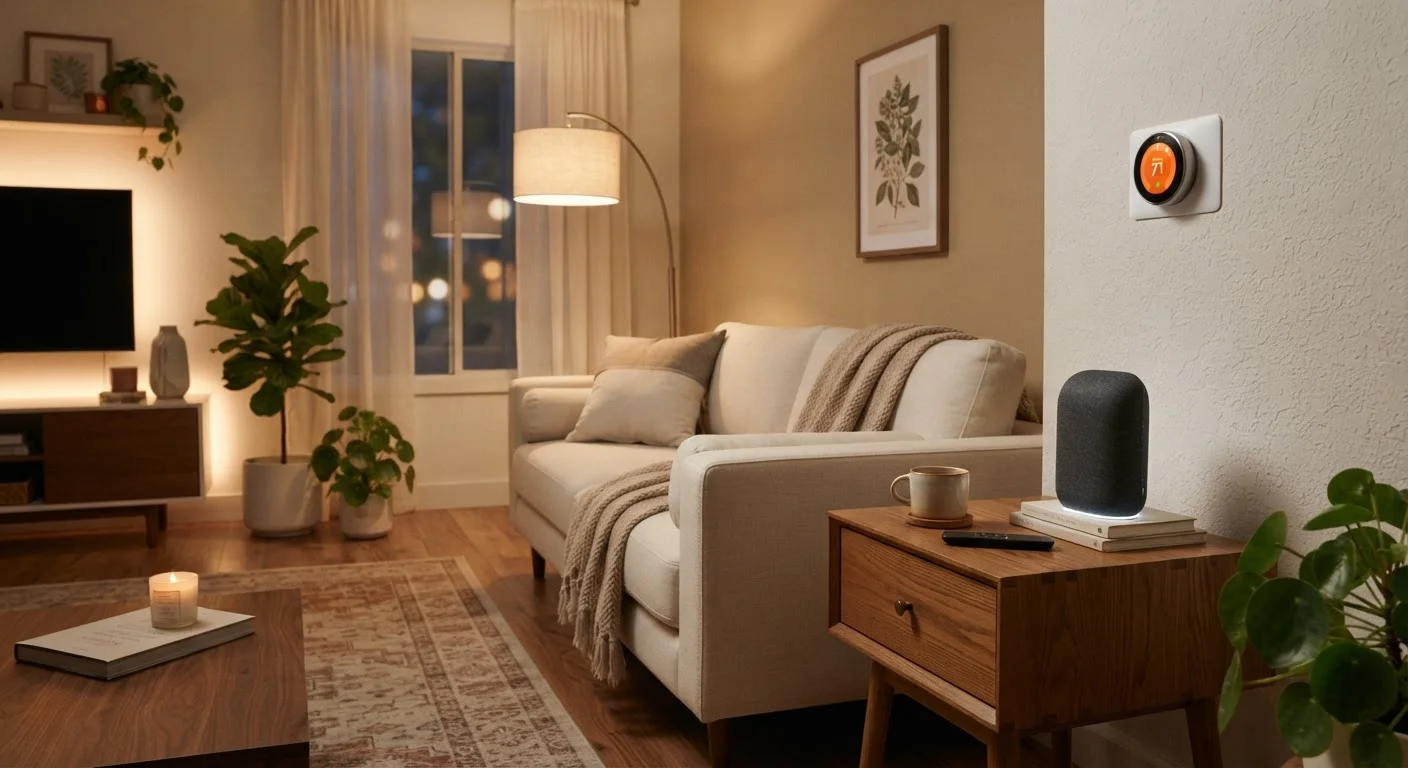
A smart thermostat is widely considered one of the highest-value first purchases. It learns or adapts to your schedule, can be adjusted remotely, and many users find it makes their home more comfortable with less manual fiddling. Setup typically involves replacing an existing thermostat - if you're uncertain whether your HVAC system is compatible, consult the thermostat's compatibility checker or a qualified HVAC technician before purchasing.
Smart Lighting
Smart bulbs and smart switches let you control lighting through an app or voice command, set schedules, and automate lights based on time of day. They're among the easiest devices to install and offer immediate quality-of-life improvements.
Smart Plug
A smart plug converts any standard outlet into a remotely controllable one. It's an inexpensive way to automate lamps, fans, or small appliances - and a great low-stakes device for getting comfortable with the platform before moving to more involved installations.
Expanding Thoughtfully After the Basics
Once the foundation is in place and you've lived with a few devices for a few weeks, you'll have a much clearer sense of what you actually want next. Common next additions include smart door locks, video doorbells, indoor cameras, and smart speakers - each with its own setup considerations and privacy implications worth researching before you commit.
The guiding principle at every stage is the same: add one device, learn it fully, then move on. That approach keeps the system manageable and makes troubleshooting far easier when something doesn't behave as expected.
For readers who want to get more from the devices they already own before adding new ones, getting more from a device you already own is a practical place to look. And if you're setting up a dedicated home office alongside your smart home, the home office tech setup guide covers the decisions that most affect productivity and reliability.
Don't Overlook Security Basics
Every new smart device is another potential entry point into your home network. Use a unique, strong password for each device account, enable two-factor authentication where it's available, and keep device firmware updated. These steps aren't optional extras - they're standard practice for any connected home.