
The Problem Password Managers Solve
The average person manages dozens of online accounts - email, banking, shopping, streaming, and more. Security guidance consistently recommends using a different, complex password for every account. But remembering 50 unique passwords is practically impossible, so most people take shortcuts: reusing the same password, or choosing something simple like a pet's name or a birthday.
This is exactly what attackers count on. When one website suffers a data breach and your password is exposed, criminals immediately try that same password on banking sites, email, and social media. This attack method, called credential stuffing, is automated and happens at massive scale. A password manager breaks this chain entirely by making it easy to have a different, strong password everywhere.
80%+
Data breaches involving weak or stolen passwords
Verizon's Data Breach Investigations Report has consistently found that the majority of hacking-related breaches involve compromised credentials.
100+
Average number of passwords per person
NordPass research has estimated that the typical internet user manages more than 100 password-protected accounts.
65%
People who reuse passwords across accounts
A Google/Harris Poll survey found that nearly two-thirds of Americans admit to reusing the same password for multiple accounts.
How a Password Manager Works
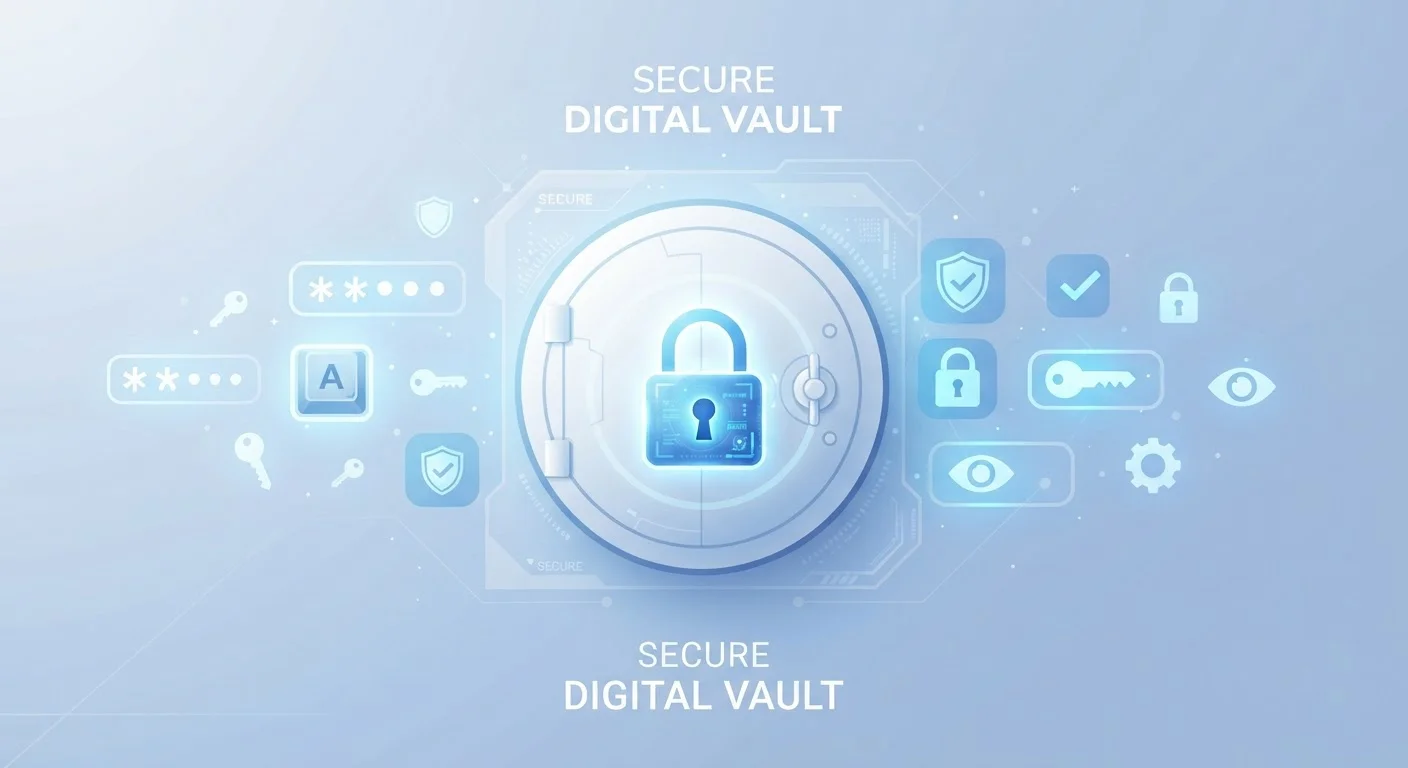
Think of a password manager as a highly secure, digital safe-deposit box. When you save a password inside it, that data is encrypted - converted into a scrambled format that is unreadable to anyone without the right key. That key is your master password, which only you know.
When you visit a login page, the password manager recognizes the site and offers to fill in your username and password automatically. This auto-fill feature also doubles as a phishing defense: if you're on a fake website designed to look like your bank, the password manager won't recognize the address and won't fill in your credentials - alerting you that something is off.
Most services also sync your encrypted vault across your devices, so your passwords are always available whether you're on your laptop, phone, or tablet.
Start with Your Most Important Accounts
When setting up a password manager for the first time, prioritize your email, banking, and any account that stores payment information. Email is especially critical - it's often used to reset passwords for everything else. You don't need to migrate every account at once; adding a few high-value logins first still meaningfully reduces your risk.
What Makes a Master Password Different
Your master password is the single password that unlocks your entire vault. Because it carries so much responsibility, it should be genuinely strong - ideally a long phrase made up of random words, something like four or five unrelated words strung together. The length matters more than complexity.
Critically, this password should never be stored digitally or reused anywhere else. Write it down and keep it somewhere physically secure, like a home safe or a sealed envelope stored apart from your devices. Pairing your password manager with two-factor authentication adds another layer of protection, so even if someone discovered your master password, they still couldn't access your vault without a second verification step.
Password Managers in Everyday Life
Once set up, a password manager fades into the background - it just works. Creating a new account somewhere? The manager suggests a strong, unique password and saves it instantly. Logging into a site you haven't visited in months? Your credentials appear automatically. Switching to a new phone? Your vault syncs over securely.
Many password managers also monitor known data breach databases and alert you if any of your saved credentials appear in a leaked dataset. This kind of proactive monitoring gives you a chance to change a compromised password before any real damage is done.
A shopper creates an account at an online retailer, and the password manager instantly generates a 20-character random password and saves it automatically.
Someone receives an email that appears to be from their bank and clicks a link to a convincing but fraudulent login page.
A user gets a breach alert from their password manager noting that their email and password from an old forum account appeared in a leaked database.
Someone upgrades to a new smartphone and needs access to all their accounts right away.
For a broader look at securing your digital life, the personal online security audit checklist is a practical place to start. And if you want to understand other tools in the security toolkit, device encryption and VPNs each cover a different piece of the puzzle. Together with smart everyday device habits, a password manager forms the foundation of a practical, low-effort security routine.