

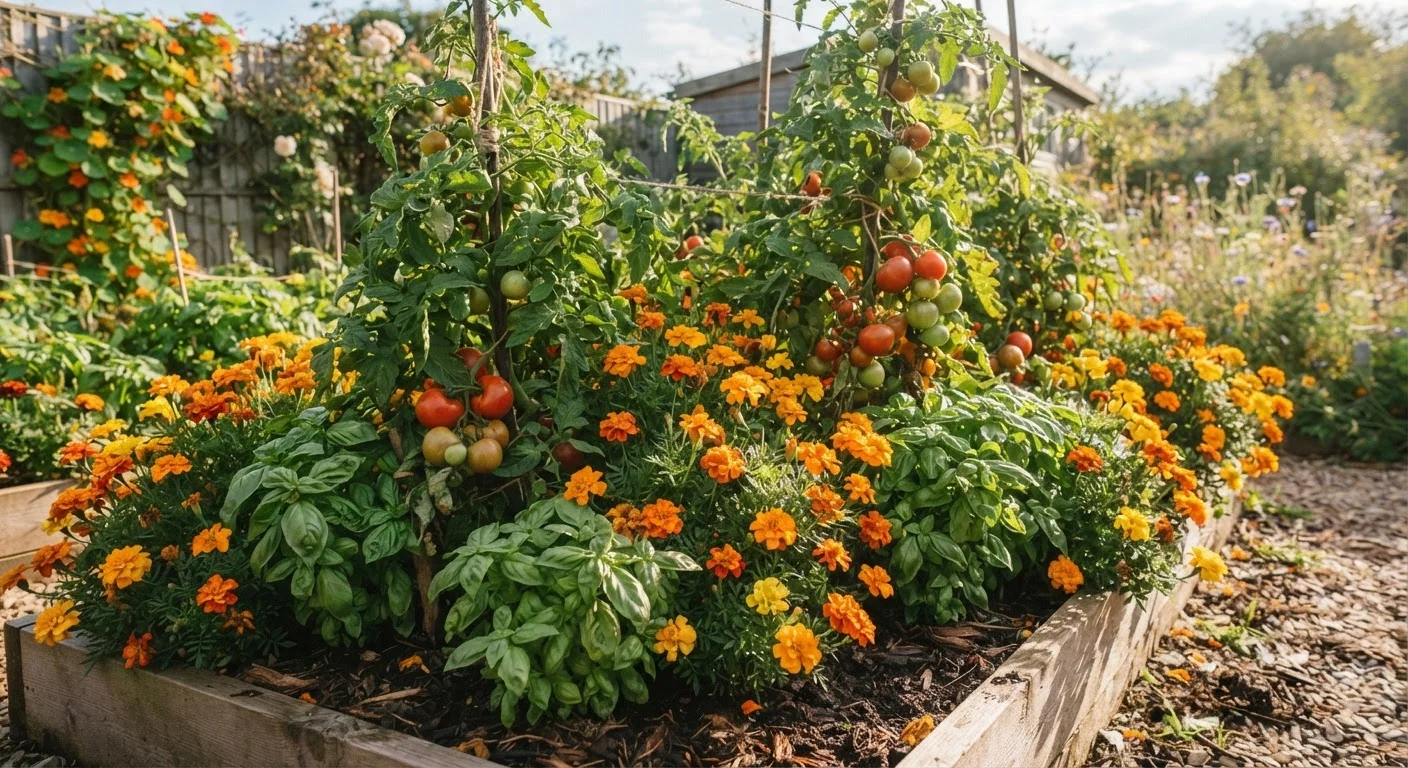
What Companion Planting Actually Is
Companion planting is the practice of deliberately growing two or more plant species near each other with the expectation that at least one will benefit. The claimed benefits range from pest deterrence and improved pollination to enhanced flavor and better yields. The idea is ancient - Indigenous farmers in North America were refining it centuries before European contact - and it has been enthusiastically embraced by modern home gardeners.
The challenge is that enthusiasm has outpaced evidence for many specific pairings. Horticultural scientists have tested some combinations rigorously, while others remain in the realm of tradition and anecdote. Understanding the difference helps you make smarter planting decisions rather than simply following garden-center lore.
If you're still deciding on your garden layout, our guide to raised beds vs. in-ground planting covers how your setup choice affects which companion strategies are even practical.
Myths and Facts: What the Evidence Shows
These are some of the most widespread companion planting claims - and what research actually tells us about each one.
Myth
Planting marigolds anywhere near vegetables will repel all common pests.
Fact
French marigolds (Tagetes patula) have demonstrated suppression of certain nematodes and some aphid species, but their effect on most above-ground insects is limited and species-specific.
The marigold reputation is partly earned and partly overstated. Research published in agricultural journals has confirmed that French marigolds produce thiophene compounds in their roots that can reduce root-knot nematode populations when planted in quantity - but this requires a full-season planting, not a border row. Above-ground pest deterrence is far less consistent. Studies have shown mixed results on whitefly and aphid populations depending on marigold species, density, and pest pressure. They do attract beneficial pollinators and some predatory insects, which is a genuine, if indirect, benefit.
Myth
Basil planted next to tomatoes makes the tomatoes taste better.
Fact
There is no peer-reviewed scientific evidence that basil improves tomato flavor. The pairing is horticulturally compatible but the flavor claim is culinary folklore.
Tomato flavor is determined by genetics, ripening conditions, soil mineral content, and water management - not by neighboring plants. The basil-tomato pairing persists because both thrive in similar conditions (full sun, warm soil, regular water) and they are culinarily complementary, which makes the idea intuitively appealing. Some small studies have examined whether basil reduces certain aphid or thrip pressure near tomatoes, with inconclusive results. Growing them together is perfectly sensible for garden efficiency, but expecting a flavor upgrade is likely to disappoint.
Myth
The Three Sisters - corn, beans, and squash - is just a Native American legend with no real agricultural value.
Fact
The Three Sisters system is one of the most rigorously documented and ecologically sound polyculture strategies, with measurable benefits for soil nitrogen, moisture retention, and weed suppression.
Agricultural researchers have studied this combination for decades. Corn provides a vertical structure for bean vines to climb, freeing ground space. Beans fix atmospheric nitrogen through root bacteria, improving soil fertility over time. Squash leaves spread across the soil surface, reducing moisture evaporation and suppressing weed growth by blocking sunlight. Multiple university extension studies have shown that Three Sisters plots can produce comparable or superior combined yields to monoculture plots of the same species grown separately - while also building rather than depleting soil. This is companion planting with well-understood mechanisms and a long, verifiable track record.
Myth
Companion planting can replace pesticides entirely if done correctly.
Fact
Companion planting can reduce pest pressure as part of an integrated system, but no planting combination reliably eliminates the need for other management strategies under significant pest load.
Integrated pest management (IPM) - the approach recommended by most university extension services - uses companion planting as one tool among several, alongside crop rotation, physical barriers, biological controls, and targeted interventions when needed. In high-pressure pest environments, companion plants alone rarely hold the line. Expecting them to do so can lead to delayed action and significant crop loss. The realistic goal is reducing chemical inputs and supporting natural predator populations, not eliminating all intervention. Companion planting is most effective when pest pressure is moderate and the overall garden ecosystem is already reasonably healthy.
Myth
Plants that are bad companions actively poison each other through their roots.
Fact
True allelopathy - chemical suppression of one plant by another - exists but is far less common in vegetable gardens than popular guides suggest. Most 'bad companion' claims lack documented mechanisms.
Allelopathy, the process by which one plant releases chemicals that inhibit another's growth, is real and well-documented in specific cases. Black walnut trees produce juglone, which genuinely suppresses a range of plants within root range. Sunflowers and some brassicas also show mild allelopathic properties. However, many 'avoid this pairing' rules in popular gardening literature are based on anecdote, misattributed competition for resources, or simple correlation without controlled testing. Plants struggling near a supposed 'bad companion' are often experiencing resource competition - light, water, nutrients - rather than chemical interference. Verifying the specific mechanism before redesigning your garden layout is worthwhile.
The Mechanisms That Actually Work
When companion planting does deliver results, a few specific mechanisms tend to be responsible. Understanding them helps you evaluate any new pairing you encounter.
- Nitrogen fixation: Legumes (beans, peas) host soil bacteria that convert atmospheric nitrogen into a form plants can use. Neighboring crops can benefit when legume roots decompose, not during the growing season as some guides claim.
- Attracting beneficial insects: Flowering herbs and native wildflowers can draw parasitic wasps, lacewings, and other predators that control pest populations. Diversity of bloom time matters.
- Physical disruption: Tall crops providing shade or ground covers reducing bare soil can interrupt pest habitat and egg-laying cycles - a structural, not chemical, benefit.
- Volatile chemical emission: Some plants genuinely release compounds that repel insects or suppress weed germination, though effective concentrations in a field setting are difficult to achieve consistently.
For a closer look at the pests these strategies target, see our article on common garden pests and what they're doing to your plants.
Don't Rely Solely on Companion Plants for Pest Control
If you're dealing with a significant pest outbreak, companion plants are unlikely to resolve it on their own. Delaying other interventions - such as removing infested material, using row covers, or consulting your local extension service - can allow pest populations to escalate quickly. Use companion planting as prevention, not as a crisis response.
Building a Realistic Companion Planting Strategy
The most productive approach treats companion planting as one layer of a healthy garden system, not a standalone solution. Start with soil - well-structured, adequately nourished soil supports plant resilience far more than any neighbor plant. Our soil amendments explainer can help you assess what your beds actually need.
From there, focus on pairings with demonstrated benefits: the Three Sisters combination, marigolds near tomatoes and peppers, and flowering herbs near any vegetable patch. Track what you observe season to season - your specific microclimate, pest pressure, and soil biology will shape outcomes as much as any published recommendation. Companion planting rewards patient, observant gardeners more than those looking for a single foolproof formula.