
What USDA Hardiness Zones Actually Tell You
The USDA Plant Hardiness Zone Map divides the United States into 13 zones based on average annual extreme minimum temperatures - the coldest it's likely to get in a given location. Each zone covers a 10°F range, and each is split into an "a" and "b" half-zone representing 5°F increments. Zone 6b, for example, has average annual extreme lows between -5°F and 0°F.
| Number of USDA Hardiness Zones | 13 primary zones (26 half-zones) (USDA Agricultural Research Service) |
| Temperature range per zone | 10°F per zone; 5°F per half-zone (USDA Plant Hardiness Zone Map) |
| Frost damage threshold | 32°F (0°C) for most tender plants (General horticultural standard) |
| Frost date probability standard | 50% chance - equal likelihood before or after the date (NOAA climate normals methodology) |
| Typical microclimate temperature variation | 2°F-10°F within the same property (University extension horticulture guidance) |
| Best local frost date source | Your state's cooperative extension service |
Zones are most useful for evaluating perennial plants - trees, shrubs, and flowering perennials that must survive winter in place. A plant tagged as "hardy to Zone 5" is bred to tolerate those minimum temps without dying back to the roots. For annuals and vegetables, which complete their life cycle in a single season, zone maps are largely irrelevant. What matters there is something different: frost dates.
One important limitation: hardiness zones reflect average historical data, not guarantees. An unusual cold snap or warm winter can push your garden outside the statistical norm. Treat your zone as a starting point, not a ceiling.
Frost Dates: The Real Calendar for Food Gardeners
Frost dates are statistically derived estimates of when temperatures at or below 32°F are likely to occur in your area. Gardeners typically track two key dates:
- Last spring frost date - after which tender seedlings can generally be transplanted outdoors safely
- First fall frost date - the point after which cold-sensitive crops risk damage
These dates come with probability attached. A "50% chance" date means there's an equal likelihood of frost occurring before or after that calendar point. More conservative gardeners use the 10% or 90% probability thresholds available from NOAA's climate data, depending on how much risk they're willing to accept with cold-sensitive crops.
The window between last spring frost and first fall frost defines your growing season length - a number that varies dramatically across the U.S. Parts of coastal California may have 300+ frost-free days; northern Minnesota gardeners may work with fewer than 100. Before you plant, use your local cooperative extension service's published frost date tables, which reflect conditions closest to your specific county or region.
Once you know your frost dates, use them alongside seed packet guidance. "Start indoors 6-8 weeks before last frost" is a direct instruction tied to this calendar framework. See our fall garden prep checklist for a season-end timeline built around these same milestones.
Microclimates: Where Your Garden Differs From the Map
Even within a single zip code, temperature, moisture, and wind exposure can vary significantly from one part of a yard to another. These localized variations are called microclimates, and understanding them can make a meaningful difference in plant survival and productivity.
Hardiness Zone
A geographic classification based on average annual extreme minimum winter temperatures, used to indicate which perennial plants can be expected to survive winter in a given region. The USDA system is the most widely used standard in the United States.
Frost Date
A statistically estimated calendar date when temperatures at or below 32°F are likely to occur in a specific area. Gardeners use spring and fall frost dates to time planting and harvest.
Microclimate
A localized area where climate conditions - such as temperature, humidity, or wind - differ noticeably from the surrounding region. Microclimates within a single yard can affect plant survival as meaningfully as regional climate differences.
Growing Season
The period between the last spring frost and the first fall frost, during which outdoor temperatures support active plant growth. Length varies widely by region and specific site conditions.
Radiative Cooling
The process by which surfaces and air lose heat to the open sky on clear, calm nights. This is the mechanism behind most frost events and explains why frost forms even when daytime temperatures feel mild.
Common microclimate influences in residential gardens include:
- South-facing walls and fences - absorb solar heat during the day and radiate it at night, creating a warmer zone that can extend the growing season
- Low-lying areas - cold air sinks and pools in depressions, making frost hit earlier and harder than on level ground or slopes
- Paved surfaces - concrete and asphalt store heat, warming adjacent planting areas noticeably
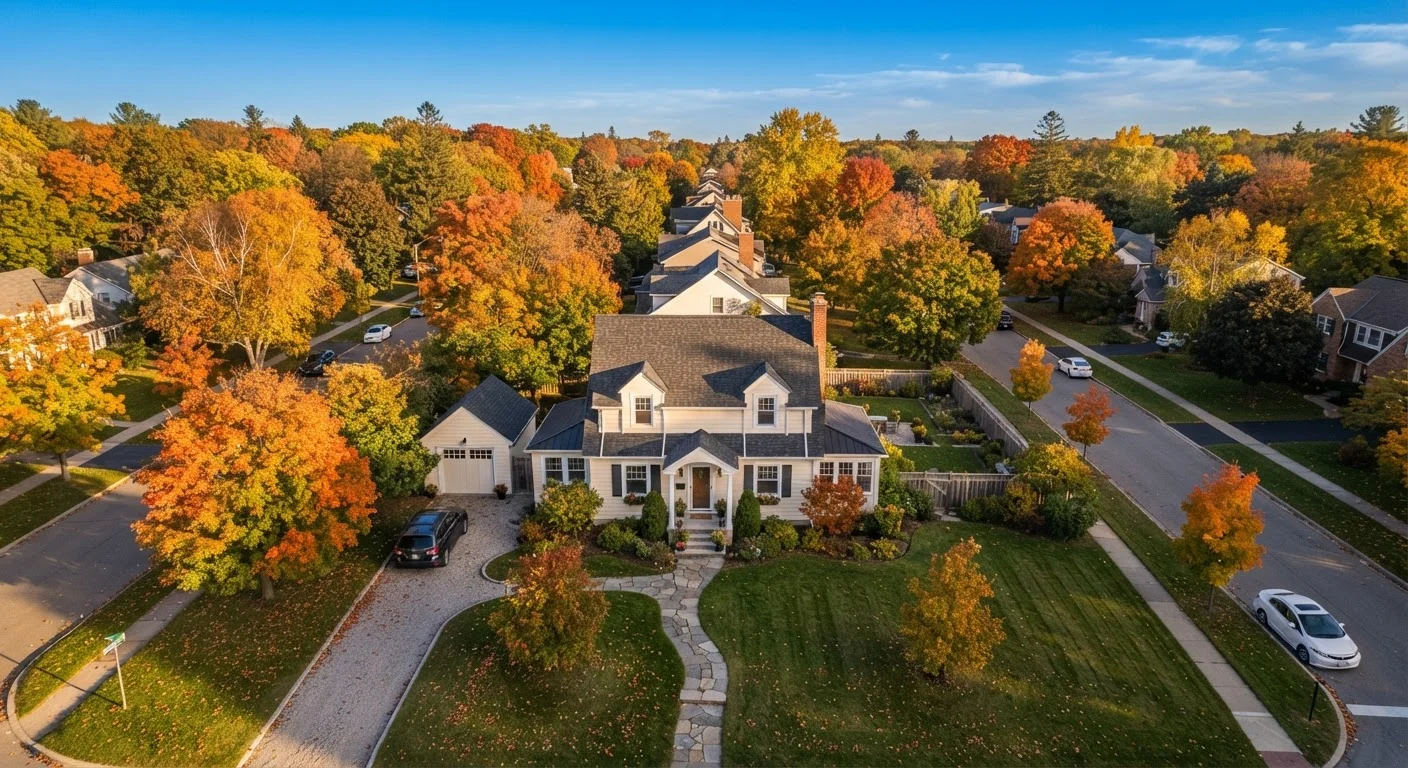
- Overhead canopy - tree cover reduces radiative cooling at night, often keeping temperatures a few degrees warmer than open areas
- Wind corridors - gaps between structures can create channeled airflow that increases cold damage on exposed plants
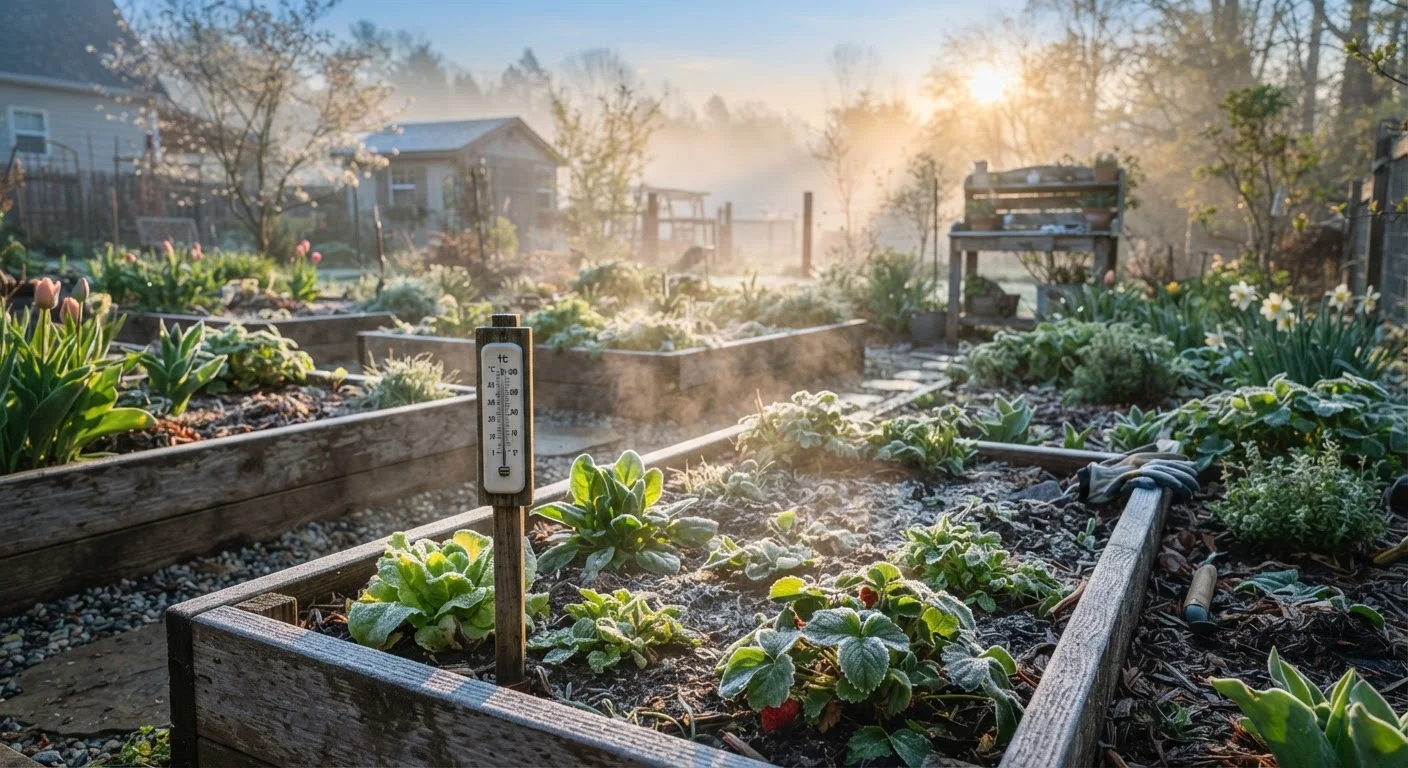
Practical tip: observe your yard across multiple seasons before committing expensive or slow-growing plants to a specific location. A thermometer left in different spots overnight - especially on a clear, calm night when frost risk peaks - can reveal surprising differences across just a few feet. Container gardeners have a built-in advantage here: pots can be moved to exploit favorable microclimates. For more on that flexibility, see our guide on container gardening on patios and balconies.
Protecting plants in cold microclimates often comes down to ground-level strategies. Mulching correctly before winter insulates soil and moderates the freeze-thaw cycles that heave plant roots. And if you're also preparing your home structure for cold weather, our fall home maintenance checklist covers both the garden and the house in one organized pass.