

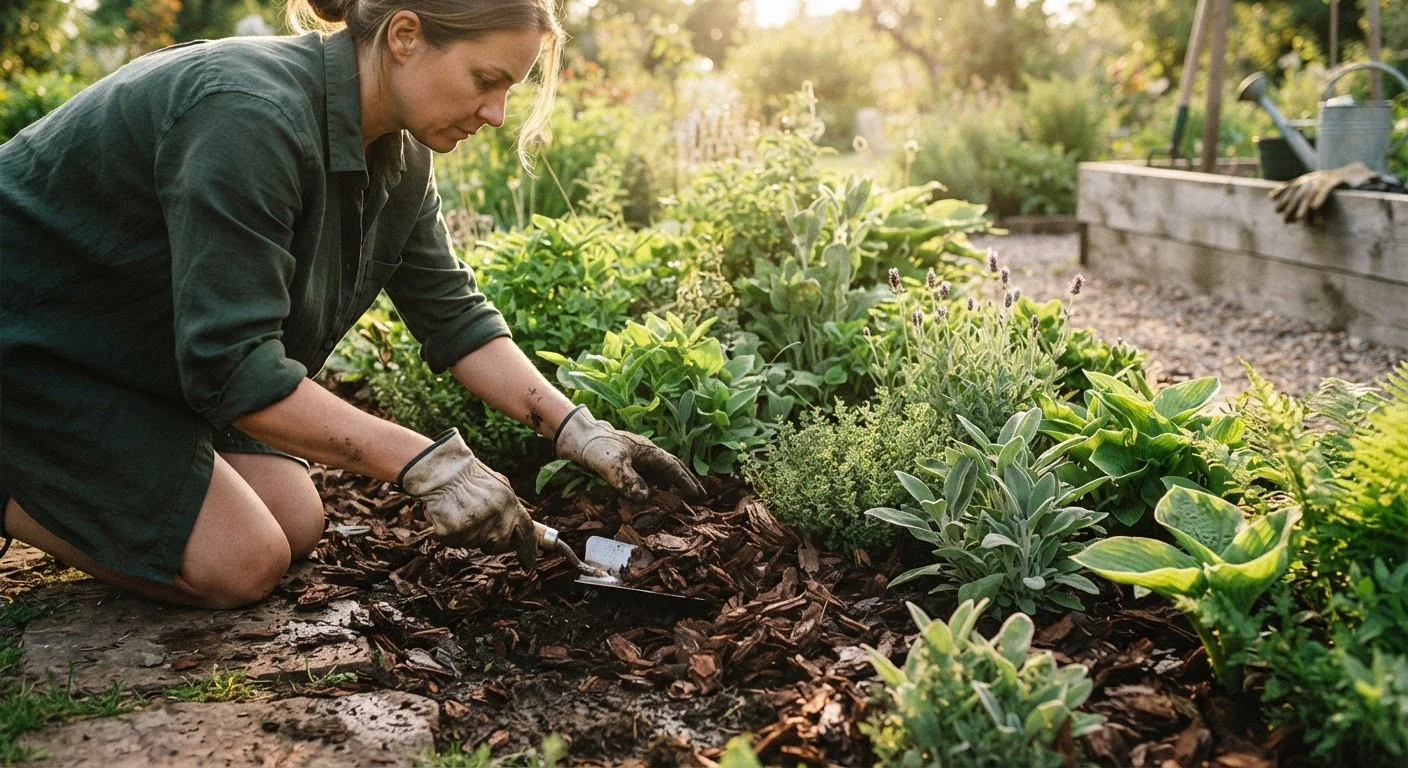
Why Mulching Is Worth Getting Right
Mulch does a lot of quiet, important work: it slows soil moisture evaporation, moderates soil temperature fluctuations, suppresses weed germination, and-in the case of organic materials-gradually improves soil structure as it decomposes. But these benefits depend entirely on applying it correctly. Too thin and it stops working; too thick and it creates problems of its own.
Whether you're managing raised beds, in-ground borders, or trees and shrubs, the fundamentals are the same. Understanding why mulch works the way it does helps you make better choices at every step. See our guide to raised beds vs. in-ground planting for more on how your garden setup affects mulching decisions.
Apply mulch at 2-3 inches deep and measure periodically to maintain that range.
Coverage below 2 inches loses most of its weed-suppression and moisture-retention value. Above 4 inches, mulch can restrict oxygen and water movement to roots and create habitat for pests and rodents.
Keep mulch pulled 3-6 inches away from plant stems and tree trunks.
Continuous moisture contact with woody tissue invites crown rot, fungal disease, and bark-boring insects. The damage is often slow and goes unnoticed until it's significant.
Choose organic mulch for beds where soil improvement is a goal.
Organic materials break down into humus, feeding soil microbes and improving soil structure over time. This makes each season's mulch layer a long-term investment in soil health, not just a surface treatment.
Rake and inspect existing mulch before adding a fresh layer each season.
Old mulch can mat and form a hydrophobic crust, or harbor mold and disease. A quick rake breaks up clumps, improves air circulation, and lets you assess whether you're adding to a healthy base or a problematic one.
Match mulch material to the specific planting context.
Pine needles suit acid-loving plants like blueberries; straw works well in vegetable gardens because it's easy to move at planting time; coarse wood chips suit pathways and tree rings. Using the wrong material can alter soil pH or create drainage issues.
Choosing the Right Material for Your Garden
Mulch falls into two broad categories: organic (once-living materials that decompose) and inorganic (stones, gravel, landscape fabric). Each has a legitimate place depending on your goals.
Organic options include shredded hardwood bark, wood chips, straw, shredded leaves, pine needles, and compost. These break down over time, feeding soil organisms and improving texture-an especially good fit for vegetable beds and perennial borders. Shredded leaves are an underrated free resource; running a lawn mower over fallen leaves gives you serviceable mulch with zero cost. For how organic amendments interact with your soil more broadly, see our overview of soil amendments.
Inorganic options like crushed gravel or river rock work well around drought-tolerant plants or in pathways where you want permanence and don't need soil enrichment. They don't break down, so they require less frequent replenishment-but they also don't build soil.
A Note on Dyed and Colored Mulch
Dyed wood mulches are widely available and generally considered safe for garden use when the base wood is untreated. However, some dyed products use recycled wood that may include treated lumber. If you're mulching edible gardens or areas where children play, look for products that clearly state they use clean, untreated source wood. When in doubt, plain shredded bark or homemade leaf mulch are straightforward alternatives.
Coverage Depth: The Numbers That Actually Matter
For most garden beds, aim for 2 to 3 inches of mulch. This depth is enough to suppress most weed seeds and retain meaningful soil moisture without creating drainage or air-exchange problems. Vegetable gardens and annual beds on the lighter end (around 2 inches) work well because frequent planting and root activity benefit from less compaction overhead.
Trees and shrubs can tolerate up to 3-4 inches over their root zones, but the classic mistake here is the "mulch volcano"-piling mulch directly against the trunk. This keeps bark perpetually moist, inviting rot, fungal disease, and even pest damage. Always pull mulch back 3-6 inches from any stem or trunk, creating a flat ring rather than a mound.
25-50%
Reduction in soil moisture loss with proper mulching
University cooperative extension programs commonly cite this range for the evaporation reduction achieved by a 2-3 inch organic mulch layer during warm growing months.
4-6°F
Soil temperature buffering provided by mulch
Research from multiple land-grant universities indicates that a standard mulch layer can moderate soil temperature swings by several degrees, protecting roots from heat stress and cold injury.
Timing Your Applications Through the Seasons
Spring is the most impactful mulching window. Apply after the soil has warmed slightly-mulching over cold soil too early can delay warming and slow plant establishment. A spring layer locks in early moisture and heads off the first flush of weed growth before it starts.
Summer mulch is largely maintenance: top off any areas where coverage has thinned below 2 inches, especially in vegetable beds where moisture loss through evaporation is most costly on hot days.
Fall mulching is about insulation. Applying 2-3 inches before the first hard freeze helps buffer soil temperature swings that can heave shallow-rooted perennials and bulbs out of the ground. It also protects overwintering soil organisms. For a full seasonal checklist, see our fall garden prep guide. Your local frost dates-explored in our hardiness zones and microclimates article-help you nail the right fall application window for your region.
Maintenance and Common Mistakes to Avoid
Mulch isn't a set-it-and-forget-it solution. Organic materials decompose-that's the point-which means annual replenishment is part of the routine. Before adding a fresh layer each spring, rake the existing mulch to break up any surface crust that has formed. A compacted top layer can shed water rather than allowing it to filter through, defeating the moisture-retention benefit entirely.
Watch for hydrophobic mulch, a condition where very dry organic mulch (especially fine bark) becomes water-repellent. If water beads on the surface rather than soaking in, raking and light watering will usually restore permeability. If you're also working compost into your beds, a reliable home composting system can supply a steady stream of finished material that doubles as a nutrient-rich mulch alternative for vegetable beds.