
What Container Gardening Can Realistically Offer
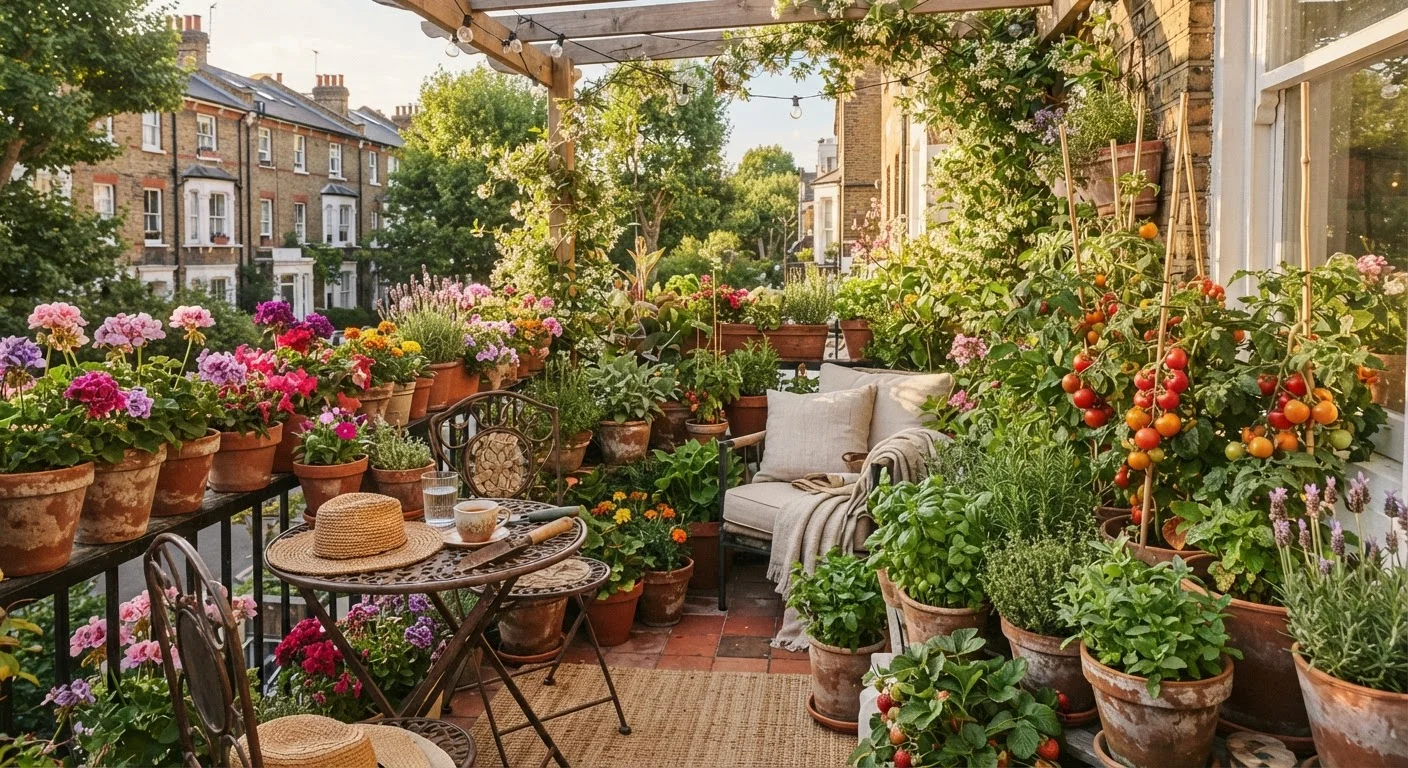
Container gardening does far more than fill a corner with a few petunias. A well-planned arrangement of pots can produce a continuous harvest of herbs and salad greens, stage blooms across an entire growing season, and even support compact fruiting plants like strawberries, peppers, and dwarf tomatoes-all from a balcony or patio with zero in-ground soil access.
The core appeal is control. You choose the potting mix rather than inheriting whatever soil the previous homeowner left behind. You move containers to follow sun or shelter them from frost. You can try companion combinations in tight groupings-for ideas, see our guide on companion planting science and practice-without committing to a permanent bed layout.
Container setups also suit renters who can take their garden with them when they move, and they work as a low-stakes entry point for beginning gardeners. Our first-season vegetable garden walkthrough is a good starting resource if you're new to growing edibles altogether.
No in-ground soil required
Patios, balconies, and paved surfaces all become viable growing spaces. Renters and apartment dwellers can garden without any permanent modification to the property.
Full control over soil quality
Gardeners choose and amend their own potting mix rather than working with existing ground soil, which can be compacted, nutrient-depleted, or contaminated.
Portable and rearrangeable
Containers can be moved to optimize sun exposure, protect plants from unexpected frost, or reconfigure the space as needs change through the season.
Fewer soil-borne pest and disease problems
Starting with fresh potting mix each season reduces exposure to soil-dwelling pests and pathogens that accumulate in established garden beds over time.
Easy to manage for beginners
The smaller scale of a container setup makes it easier to observe plants closely, catch problems early, and learn from each season without overwhelming effort.
The Real Limits You'll Run Into
Containers impose hard biological and physical ceilings. Root volume is the most significant: even a 15-gallon pot gives roots only a fraction of the space they'd occupy in open ground. Plants that naturally develop wide or deep root systems-think zucchini, sweet corn, large indeterminate tomato varieties, or any standard fruit tree-will be chronically stressed in a pot, producing poorly and requiring constant intervention to survive.
Water is the other constant challenge. Pots dry out dramatically faster than in-ground soil, especially unglazed terracotta in full sun. During summer heat waves, some containers may need watering once or even twice daily. Nutrients also leach out quickly with frequent watering, so container plants need regular fertilizing throughout the season-a task that's easy to forget and costly when neglected.
If you're gardening on a balcony rather than a ground-level patio, structural weight limits are a non-negotiable constraint. Wet soil, large ceramic pots, and water reservoirs add up fast. A single large planter filled with damp potting mix can weigh well over 100 pounds. Before loading a balcony with heavy containers, consult your building's specifications or a structural professional-this is genuinely important, not just cautionary language.
Dries out much faster than in-ground soil
Pots lose moisture rapidly, especially in hot or windy conditions. During peak summer, some containers require daily or twice-daily watering to prevent drought stress.
Nutrients leach out with frequent watering
Every watering cycle flushes some nutrients out through drainage holes. Container plants typically need supplemental fertilizing throughout the growing season to maintain productivity.
Root space limits plant size and yield
Restricted root volume means container plants rarely reach the same size or productivity as their in-ground counterparts, particularly for large-fruiting or deep-rooted species.
Heavy containers pose balcony weight risks
Large pots filled with damp potting mix can weigh well over 100 pounds each. Overloading a balcony beyond its rated capacity creates a genuine structural safety hazard.
Higher ongoing cost than in-ground gardening
Containers, potting mix (which should be refreshed or replaced periodically), and fertilizers represent recurring costs that in-ground garden beds spread more efficiently over time.
For a broader comparison of growing setups, our article on raised beds vs. in-ground planting helps put container limitations in perspective alongside other options.
Smart Plant Choices for Pots
Success in containers starts with matching plant to pot, not forcing a plant to adapt to an inadequate container. Here's a practical breakdown by category:
- Herbs: Basil, chives, parsley, mint (keep mint isolated-it spreads aggressively), thyme, and rosemary are among the most forgiving container plants. They tolerate relatively small pots and bounce back from minor neglect.
- Leafy greens and salad crops: Lettuce, spinach, arugula, kale, and chard all have shallow root systems and perform exceptionally well in wide, shallow containers or window boxes.
- Compact vegetables: Bush bean varieties, patio-type or determinate tomatoes, bush cucumbers, and dwarf pepper varieties are bred for smaller spaces. Look for descriptions like "patio," "bush," or "compact" on seed packets and plant tags.
- Flowers: Marigolds, nasturtiums, petunias, and zinnias are reliable annuals for containers. Mixing annuals and perennials thoughtfully-our guide to perennials vs. annuals explains how to layer both-extends your season without constant replanting.
- Fruiting plants: Strawberries, dwarf blueberries (in large acidic-mix pots), and fig trees in large containers can succeed with attentive care.
Potting Mix vs. Garden Soil: Not Interchangeable
Garden soil pulled from your yard or purchased in bulk is not suitable for containers. It compacts under repeated watering, suffocating roots and impeding drainage. Potting mixes are specifically engineered to stay loose in the confined environment of a pot. Look for a mix labeled for containers or all-purpose potting use, and plan to refresh or replace it every one to two seasons as it breaks down and loses its structure.
Plants that typically struggle in containers include standard indeterminate tomatoes, sweet corn, large squash, melons, artichokes, and any tree or shrub that is not a specifically compact or dwarf cultivar.
Practical Setup Decisions That Matter Most
Container material, size, and drainage design make as much difference as plant selection. A few grounded principles:
Always prioritize drainage. Every container must have drainage holes. Sitting in waterlogged soil is the fastest way to kill most container plants through root rot. Elevating pots slightly on feet or risers improves airflow and drainage.
Use actual potting mix, not garden soil. Garden soil compacts in containers, cutting off oxygen to roots. A quality potting mix designed for containers stays loose, drains well, and typically includes slow-release nutrients.
Size up generously. The most common container mistake is choosing a pot that looks right but is functionally too small. A 5-gallon container is the practical minimum for most vegetable crops; tomatoes and peppers benefit from 10 gallons or more.
Container gardening fits naturally into larger outdoor planning. If you're thinking about how containers relate to your full outdoor space, our outdoor living space planning guide addresses how to sequence plantings within a broader backyard layout.
5-10 gal
Minimum pot size for most vegetable crops
Extension horticulture programs generally recommend at least 5 gallons for smaller vegetables and 10 or more for tomatoes and peppers.
2×
How much faster containers dry vs. ground soil
University cooperative extension resources note that containers in full sun can dry out roughly twice as fast as comparable in-ground plantings during warm weather.