
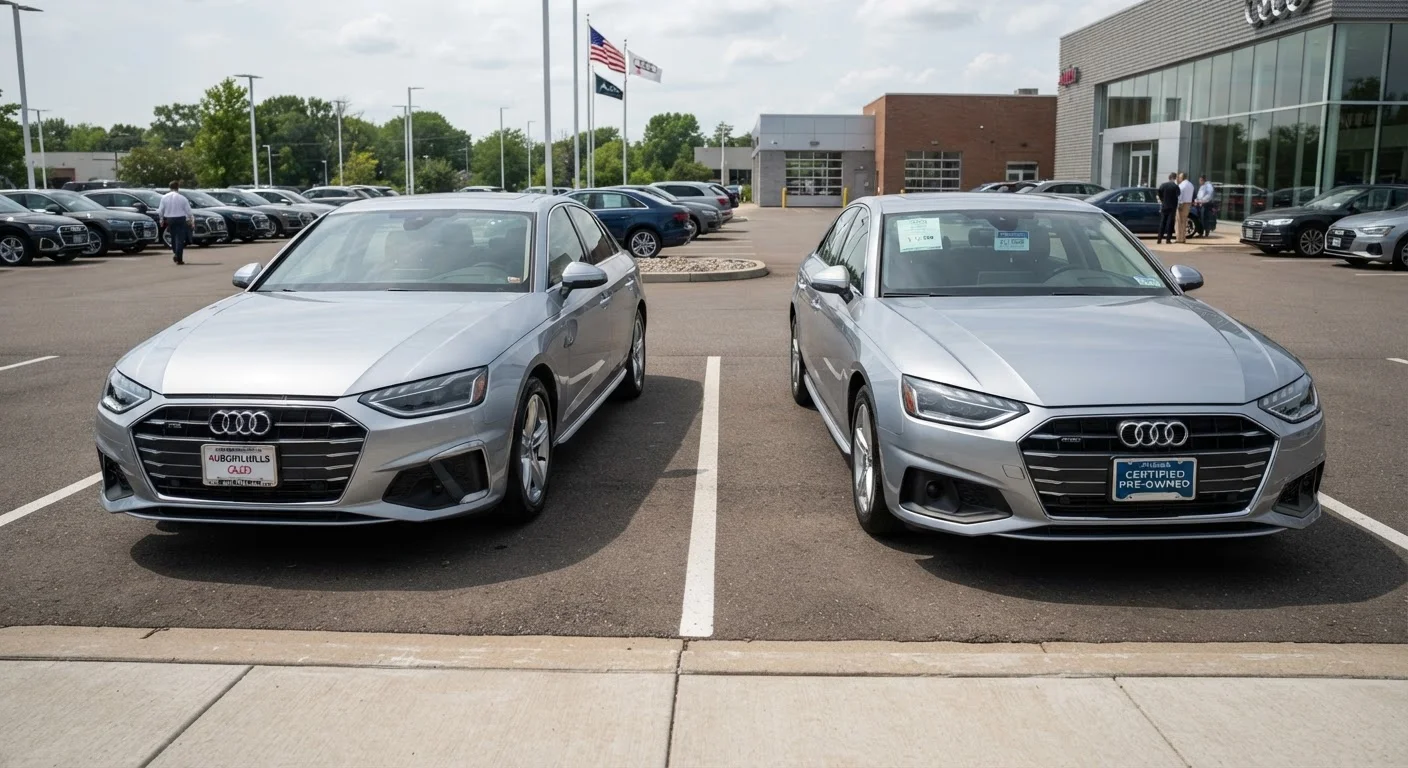
What Certified Pre-Owned Actually Means
A certified pre-owned (CPO) vehicle is a used car that has been inspected, reconditioned, and certified by either the manufacturer or the dealership selling it. Manufacturer-backed CPO programs - offered through franchised dealers of brands like Honda, Toyota, Ford, and others - typically follow a standardized checklist of 100-200 inspection points and extend a warranty that ties directly to the original factory coverage.
Dealer-certified programs, by contrast, are created and administered by individual dealerships or third-party warranty companies. These vary widely in what they cover and how claims are handled. When comparing CPO options, it's critical to distinguish between the two - a manufacturer-backed CPO label carries meaningfully more weight than a dealer-issued certification sticker.
Most manufacturer CPO programs impose eligibility limits: vehicles are generally under five or six years old and below a set mileage threshold - commonly 60,000-80,000 miles. That narrowing of the eligible pool is part of what makes CPO different from a regular used car with an aftermarket warranty bolted on at signing. For more on those finance-office add-ons, see what the finance office typically offers.
Pros and Cons of Going CPO
CPO vehicles occupy a middle ground between new and standard used - and like any compromise, they bring real advantages and genuine trade-offs.
Manufacturer-backed warranty reduces repair cost exposure
Factory CPO programs extend powertrain and sometimes bumper-to-bumper coverage, giving buyers a defined period of protection against major mechanical failures.
Multi-point inspections add documented accountability
Vehicles must pass a standardized checklist before certification, and reconditioning is performed to meet manufacturer standards - not just basic detailing.
Access to roadside assistance and loaner car benefits
Many manufacturer CPO programs include 24-hour roadside assistance and access to loaner vehicles during covered repairs, benefits not available on standard used purchases.
Reduced uncertainty compared to private-party purchases
CPO vehicles are sold through franchised dealers with documented vehicle histories, which limits some of the informational disadvantages buyers face with private sellers.
Potentially favorable manufacturer-sponsored financing rates
Some automakers offer promotional financing rates specifically on CPO inventory through their captive finance arms, which can partially offset the higher purchase price.
The warranty coverage is the centerpiece advantage. A factory-backed CPO powertrain warranty can extend coverage to 100,000 miles total, and many programs include roadside assistance and a short-term bumper-to-bumper extension. That backstop has tangible financial value, especially in the first year of ownership when you're still learning a vehicle's quirks.
Higher sticker price than comparable non-certified used cars
The CPO premium typically ranges from $1,000 to $3,500 above a comparable non-certified vehicle, and dealers are generally less flexible on price for certified inventory.
Program quality varies significantly by manufacturer and dealer
Dealer-certified programs in particular offer highly inconsistent coverage, and even manufacturer programs differ on deductibles, term length, and what components are included.
Eligible inventory is limited by age and mileage rules
Most programs restrict certification to vehicles under five or six years old and below a mileage ceiling, which excludes older or high-mileage vehicles regardless of their condition.
Inspection quality is not independently verified
The multi-point inspection is performed by the selling dealership's technicians, creating a potential conflict of interest - there is no neutral third-party oversight of what passed or failed.
Warranty exclusions can still leave significant costs uncovered
Wear items, certain electronics, and emissions components are commonly excluded, meaning some of the most frequent repair categories may fall outside covered claims.
The cost of that protection is baked into the sticker price - and dealers have limited motivation to negotiate aggressively on CPO inventory. Financing rates for CPO vehicles can also differ from rates offered on non-certified used cars, though this varies by lender and manufacturer. Always compare the all-in cost, not just the monthly payment. The full cost of car ownership extends well beyond the purchase price.
When a Regular Used Car Makes More Sense
A non-certified used vehicle isn't a riskier choice by definition - it's simply one where you take on more of the due-diligence work yourself. That trade-off can be worthwhile in several situations.
If the vehicle you want falls outside CPO eligibility - older, higher mileage, or sold by a private party - certification isn't an option regardless of your preference. In those cases, a professional pre-purchase inspection from an independent mechanic becomes the practical substitute. A thorough inspection typically costs $100-$200 and can surface mechanical issues before you're committed. Our pre-purchase inspection checklist walks through what that process should cover.
Buyers with mechanical knowledge, access to a trusted repair shop, or a higher tolerance for repair costs may find that the CPO premium doesn't pencil out. Spending $2,000 less upfront and setting that money aside as a repair reserve is a legitimate strategy - one that gives you flexibility a warranty contract doesn't.
CPO vs. New: A Related Decision
If a CPO vehicle's price is approaching that of a new base trim, it's worth running the numbers on both options before committing. New vehicles carry full factory warranties, the latest safety technology, and access to new-car financing rates - factors that can shift the value equation. Comparing new vs. used lays out a practical framework for making that call.
The decision between CPO and new is a separate but related question. Comparing new vs. used cars involves depreciation curves, financing rate differences, and total cost modeling that apply here too.
How to Evaluate a CPO Program Before You Commit
Not all CPO programs deliver equal value. Before accepting the premium, ask these specific questions:
- Who backs the warranty? Manufacturer-backed coverage is processed through franchised dealers nationwide. Third-party or dealer programs may require you to use a specific repair facility or file claims through a separate administrator.
- What is the deductible per visit? Some CPO warranties carry a $0 deductible; others charge $100 or more per repair visit, which meaningfully changes the financial math.
- What's excluded? Read the exclusions list carefully. Wear items - tires, brake pads, wiper blades - are almost universally excluded. Some programs also exclude certain electronics or emissions components.
- Is the warranty transferable? A transferable CPO warranty can strengthen resale value if you sell the vehicle before the coverage expires.
- Can you see the inspection report? Any reputable CPO program should provide documentation of what was inspected and what, if anything, was repaired or replaced during reconditioning.
Taking the time to read and compare program details puts you in a stronger negotiating position and helps you judge whether the premium reflects real added value or mainly a marketing label.
$1,000-$3,500
Typical CPO price premium over non-certified used
Industry analysts and consumer automotive research consistently place the average CPO markup in this range compared to equivalent non-certified vehicles of the same model and mileage.
100-200
Inspection points in most manufacturer CPO programs
Major automakers publish their CPO inspection checklists, which typically cover powertrain, chassis, safety systems, and interior components across this range of individual checks.