
The Documents Every Car Owner Must Have
Most drivers know they need a license and insurance card in the car - but vehicle ownership generates a surprisingly broad paper trail. Missing or outdated documents can result in fines, registration holds, or complications when selling. Here's what you're responsible for maintaining.
| Title required for sale | Yes, in all 50 states (State DMV regulations) |
| Typical registration renewal cycle | Annually or biennially (Varies by state) |
| States with emissions testing programs | Approximately 30 states (EPA vehicle inspection program data) |
| Odometer disclosure required | Yes, for most vehicles under 10 years old (Federal Truth in Mileage Act) |
| Proof of insurance format | Physical or digital (state-dependent) (State insurance regulations) |
| Lien release required for clean title | Yes, once loan is paid off (Standard lending and title law) |
Certificate of Title: This is the legal document that proves ownership. The title lists the vehicle identification number (VIN), owner name, and - if you financed - the lienholder (your lender). When you pay off a loan, the lender releases the lien and you receive a clean title. Keep this document somewhere safe, not in the vehicle itself.
Registration and License Plate: Vehicle registration confirms your car is authorized to operate on public roads in your state. It must be renewed annually or biennially depending on your state's rules. The registration document or card typically stays in the vehicle, and the current-year sticker goes on the plate.
Proof of Insurance: Most states require you to carry minimum liability coverage and be able to show proof on demand. This can be a physical card or a digital version on your phone - check your state's rules on digital acceptance. See how underinsuring quietly costs drivers for context on choosing appropriate coverage levels.
State-Specific Requirements You Can't Ignore
Vehicle documentation requirements vary meaningfully by state, and what's optional in one place can be a legal requirement in another.
Emissions and Safety Inspection Certificates: Many states - particularly those in the Northeast, California, and parts of the South - require periodic emissions testing and/or safety inspections before allowing registration renewal. Failing either test means your registration may lapse until repairs are made and the vehicle passes re-inspection.
Certificate of Title
The official legal document establishing who owns a vehicle. It includes the VIN, owner information, and any recorded liens. A clean title means no outstanding loan or legal claim against the vehicle.
Lienholder
A financial institution or lender with a legal claim on a vehicle because the buyer financed the purchase. The lien is removed once the loan is paid in full.
Vehicle Registration
State-issued authorization allowing a vehicle to be operated on public roads. Registration must be renewed on a state-determined schedule and is typically tied to proof of insurance and, in some states, passed inspections.
Odometer Disclosure
A federally mandated statement from the seller certifying the vehicle's mileage at the time of sale. It protects buyers against odometer fraud and is part of the title transfer process.
Emissions Certificate
Documentation proving a vehicle passed a state-required emissions test, confirming it meets environmental standards for exhaust output. Required for registration renewal in participating states.
Bill of Sale
A written record of a vehicle sale documenting the buyer, seller, sale price, date, and vehicle details. Used to establish the transaction for tax and legal purposes.
Odometer Disclosure Statement: Federal law requires sellers to disclose the odometer reading when transferring a vehicle title for most vehicles under ten years old. This disclosure is typically incorporated into the title transfer paperwork and protects buyers from fraud.
Bill of Sale: While not always legally required, a bill of sale documents the transaction price, date, and parties involved in a private-party sale. Many states use it to calculate sales tax owed at registration. Even in states where it's optional, creating one is a sound practice for both buyer and seller.
If you're buying a used vehicle, review the full paperwork checklist before signing to ensure the title is clean and all required disclosures are present.
Staying Organized and Staying Compliant
Lost or expired documents create friction at the worst moments - traffic stops, DMV visits, vehicle sales. A straightforward system prevents most problems.
- Store the title securely at home - a fireproof box or a safe is appropriate. Never keep it in the vehicle.
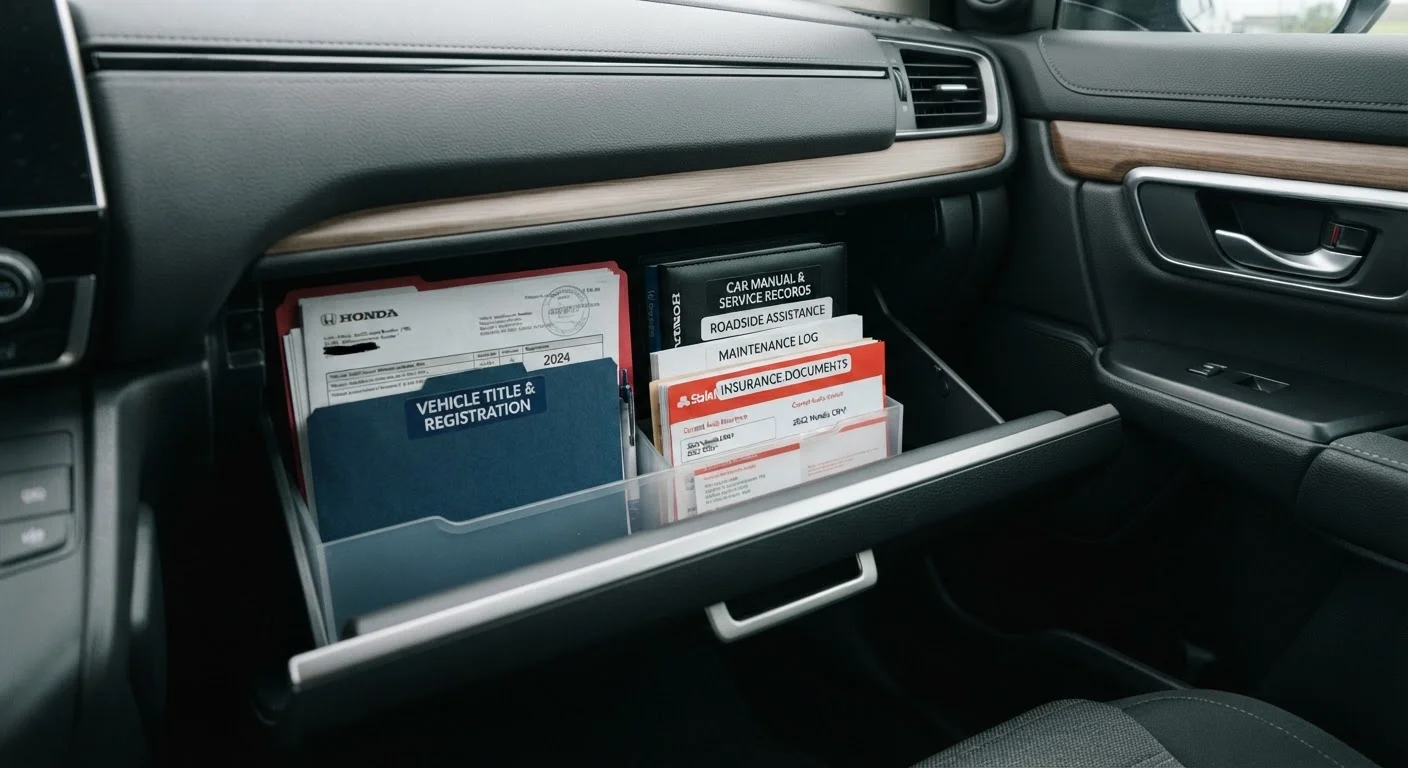
- Keep registration and insurance proof in the glove box - in a small envelope or document holder so they're easy to locate.
- Set renewal reminders - registration renewal notices arrive by mail, but it's worth setting a phone reminder 30-45 days before your renewal deadline to avoid late fees.
- Track inspection due dates - if your state requires annual inspections, note the expiration month on your calendar. Inspection stickers are visible on the windshield in many states.
- Keep maintenance records - while not legally required, a documented service history adds value when selling and can support warranty or insurance claims. routine maintenance records are part of responsible long-term ownership.
Managing vehicle paperwork isn't dramatically different from managing homeownership records. Both require tracking legally significant documents, meeting recurring deadlines, and knowing where originals are stored. See how new homeowners approach document management for a parallel framework worth considering. For a complete overview of what car ownership involves beyond the paperwork, read our guide for first-time owners.