
The Depreciation Curve: Why the First Year Hurts Most
New cars lose value faster in their early years than at any other point in their life. The steepest drop typically occurs in year one, when a vehicle transitions from "new" to "used" in the eyes of every buyer and lender in the market. Industry data has long reflected that new vehicles can shed 15-25% of their value in the first 12 months. By the end of year five, many vehicles have lost 40-60% of their original purchase price.
The curve flattens over time. A six-year-old car loses proportionally less each year than it did at age one. This is why long-term ownership is one of the more effective ways to spread out depreciation's financial impact - you absorb the early losses once, then ride a much gentler slope.
~20%
Average value lost by new cars in year one
Industry analysts and automotive valuation services have long cited first-year depreciation in the 15-25% range for most new vehicles.
~50%
Value lost by many vehicles after five years
Automotive valuation data consistently shows the majority of mainstream new vehicles lose roughly half their original value within the first five years of ownership.
#1
Depreciation's rank among car ownership costs
For most drivers who purchase new, depreciation exceeds fuel, insurance, and maintenance as the single largest annual cost of vehicle ownership.
What Causes a Car to Lose Value Quickly
Depreciation isn't random. Several identifiable factors drive how fast a specific vehicle loses value:
- Mileage: Higher mileage signals more wear and a shorter remaining usable life. Every mile added accelerates perceived value loss.
- Condition: Dents, worn interiors, neglected maintenance records, and prior accidents all reduce what a buyer is willing to pay.
- Brand and model reputation: Vehicles with strong reliability track records and loyal followings tend to depreciate more slowly because demand for them in the used market stays higher.
- Market supply: When a manufacturer floods the market with a particular model - through heavy lease programs or fleet sales - resale values typically fall as supply outpaces demand.
- Technology obsolescence: Rapidly advancing infotainment, safety systems, and powertrain technology can make even a few-year-old vehicle feel dated, pushing values down faster.
- Fuel type and economic conditions: Gas price swings and shifting consumer preferences (such as growing interest in electric vehicles) can create sudden shifts in which powertrains hold their value.
A driver buys a new midsize sedan for $35,000. Fourteen months later, they try to sell it privately and find comparable listings for $26,000-$27,000.
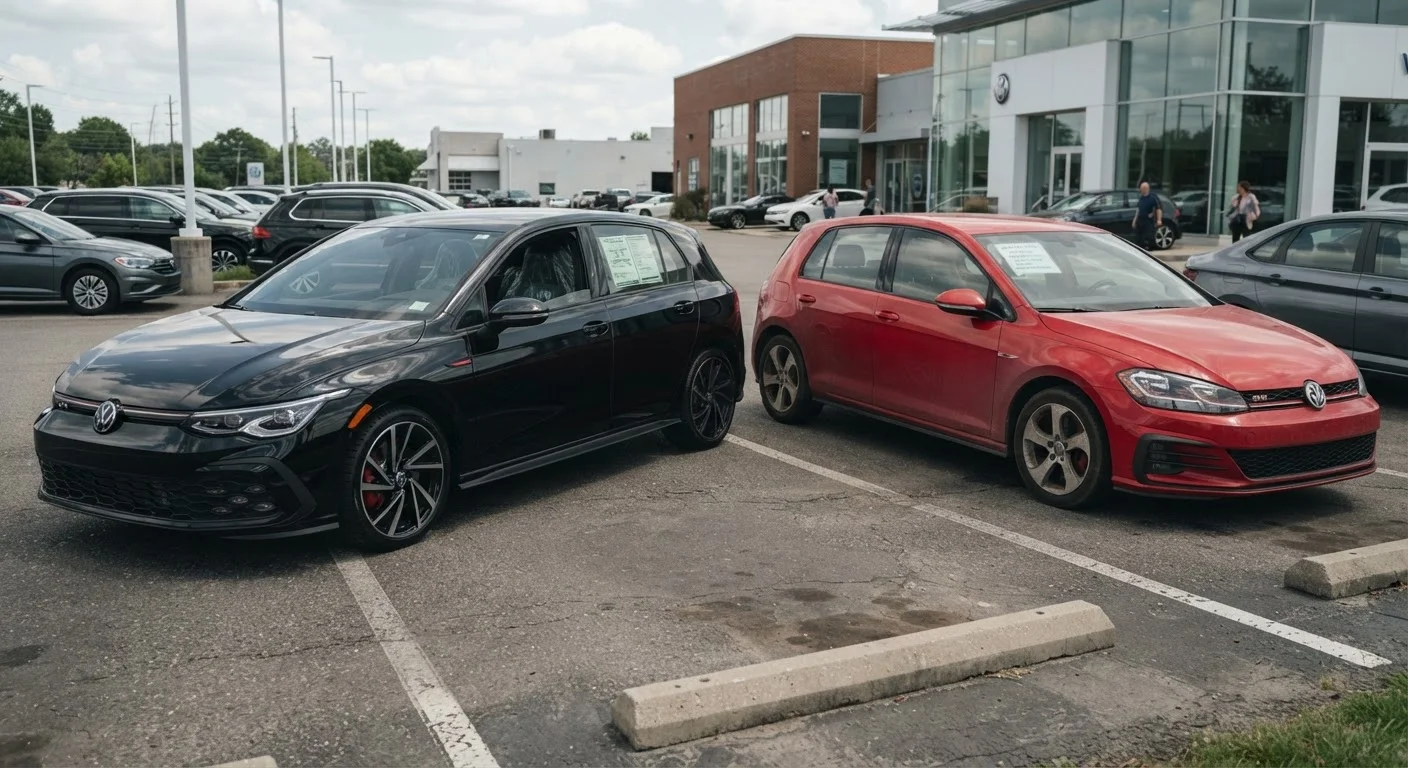
A consumer purchases a two-year-old version of the same sedan model with 22,000 miles for $27,500.
A truck buyer notices that pickup trucks in their market retain significantly more value after three years than comparable sedans.
What Depreciation Actually Costs You
Depreciation is part of the true cost of owning a car beyond the sticker price - a cost that doesn't show up on a monthly statement but is very real. If you buy a $40,000 vehicle and its value drops to $24,000 after five years, you've absorbed $16,000 in depreciation - more than $3,000 per year - simply for the act of owning it.
Unlike a mortgage payment or insurance premium, depreciation doesn't hit your checking account on a schedule. That invisibility is precisely why many drivers underestimate it. Understanding it is also relevant when you're ready to sell - how you handle a trade-in can significantly affect how much of that remaining value you actually recover.
It's also worth noting that depreciation interacts with auto financing. If a car loses value faster than you pay down your loan, you can end up "underwater" - owing more than the vehicle is worth. That's a financially vulnerable position if the car is totaled or you need to sell unexpectedly.
Using Depreciation Knowledge to Make Smarter Decisions
Understanding how depreciation works changes the way you approach vehicle ownership at every stage. A few practical implications:
- Buying used captures value: A vehicle that's two or three years old has already absorbed its steepest depreciation. You pay a lower price without necessarily sacrificing much useful life - a key reason many financial advisors suggest considering lightly used vehicles.
- Leasing reflects depreciation directly: Lease payments are essentially priced on projected depreciation during the lease term. Vehicles with slow depreciation curves often make for more affordable lease payments; high-depreciation vehicles can be expensive to lease even if their sticker price seems manageable.
- Long-term ownership amortizes the hit: The longer you keep a vehicle, the more you spread the depreciation cost across years of use. A car kept for ten years may still have depreciated substantially, but your annual cost of depreciation is far lower than that of someone who trades in every three years.
Depreciation is just one part of a larger financial story. Other overlooked costs compound quietly alongside it, making it worth stepping back to see the full picture before your next vehicle decision.
“Depreciation is the silent killer of automotive budgets. Most drivers think about their monthly payment - very few think about how much wealth their vehicle is quietly consuming each year it sits in the driveway.”
— Automotive Consumer Finance Analyst, Independent vehicle cost researcher and automotive finance commentator